
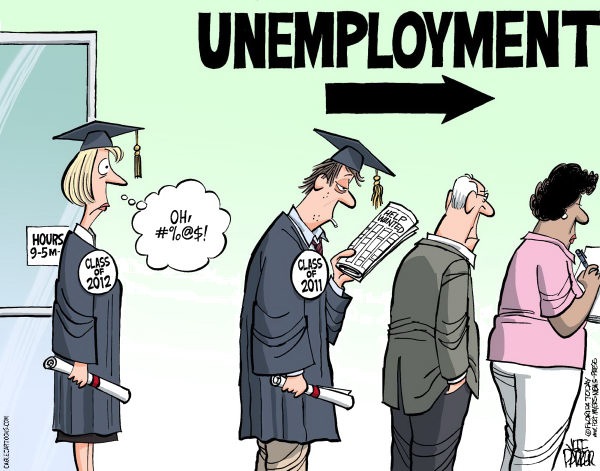
Ever Since Namibia gained its independence on 21 March 1990 from South Africa it has been an uphill battle for the relatively small populace of the country to secure jobs for themselves especially the youth.
Unemployment in the country has always been rather high even now some 28 odd years later from independence. The statistics paint a very clear picture of how the country has dealt with unemployment since its liberation.
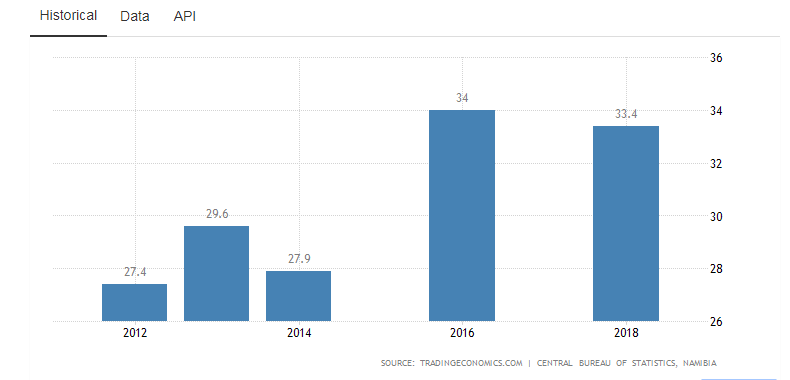
According to Central Bureau of Statistics Namibia’s historical unemployment rate stands currently at 33.4 % which is historically much higher than 2012-2014 which stood at 27.4% and 27.9% respectively. Upon further analysis, Namibia’s unemployment has always been rather high with slight fluctuates every year or so.
This is shown by the depiction below:
This is rather concerning especially when one notices there seemingly is a trend that unemployment is increasing with the population size on the ground, for example, the unemployment rate stood at 34.4% at 2.48 million registered Namibians living in the country and 34% when the population was 2.44 million.
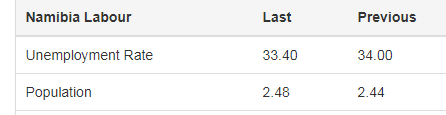
This shows that the country will suffer if it cannot find ways of employing its people if the population continues to rise which it will.
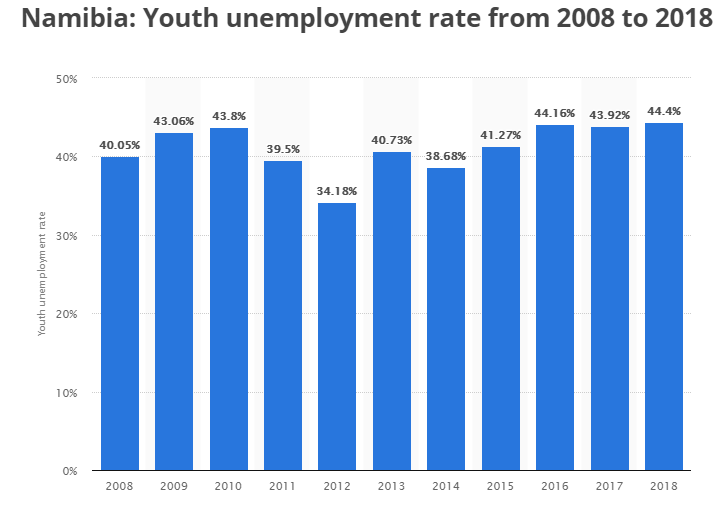
Youth unemployment is also an area of concern as it has largely stayed the same over a ten-year course and has not seen any significant changes. The World Bank has stated that the Namibian youth are most affected by Unemployment with 43.4% of them unemployed and unable to find jobs. Woman are the second-largest group affected by unemployment in the country with 38.3% of them unemployed.
The World Bank classes Namibia as one of the most unequal countries in the world with a Gini Consumption of 57.6 in 2015 meaning that there exists an unequal distribution of purchasing power throughout the economy per household resulting in high levels of inequality for everyday citizens.
There were however some positive strides made by the country being the reduction of the poverty line from 69.3% in 1993-1994 to 28.7 in 2009-2010 and a further 17.4% in 2015-2016 which shows that the country is tackling the issue in some capacity. The main contributors to inequality in the country according to the World Bank is lack of education and adequate job creation.
The following chart shows the changes in youth unemployment over the years:
 basefm.news.blog